The global silicon fertilizer market is anticipated to expand from US$ 1,740.0 million in 2021 to reach US$ 2,057.8 million by 2028, reflecting a CAGR of 2.4% during the forecast period. The surge in market size is primarily attributed to the escalating requirement for fertilizers to enhance agricultural yield. Growing adoption of silicon fertilizers by farmers to expedite crop growth, amplify vegetable outputs, and shield plants against bacterial and fungal ailments is a key propellant for market growth. Moreover, the augmentation of soil's physical and chemical attributes through silicon fertilizers is poised to bolster sales across the forecast duration.
Furthermore, the impending years are anticipated to witness exacerbated food insecurity due to heightened instances of plant diseases and erratic weather shifts. Heightened concerns regarding food sufficiency on the international and governmental fronts have spurred the demand for silicon fertilizers to combat the escalating prevalence of plant diseases.
Impact of Covid-19
The imposition of COVID-19 lockdowns in response to the outbreak has had a profound impact on the long-term agricultural output. Across the agricultural value chain, including farmers, farm laborers, service providers, extension agents, input suppliers, processors, and other participants, there have been adverse consequences stemming from their inability to fulfill their responsibilities. These limitations have hindered the timely planting of crops and the optimal utilization of high-quality and sufficient inputs like fertilizers, herbicides, and seeds, thereby affecting a wide range of practices including cultivation techniques, harvesting, and post-harvest activities. Consequently, this situation has led to a reduction in crop production and an inability to meet the demands of customers.
Swift Urbanization Shrinks Arable Land
During the projected timeframe, the growth of the silicon fertilizer market will be notably influenced by the concurrent trends of diminishing arable land and escalating food demand. This pattern has emerged due to the encroachment of urbanization and developmental activities that have led to a reduction in available arable land. In response to this, there has been a heightened application of fertilizers to enhance productivity within the limited arable regions, driven by the imperative of maximizing yields despite the reduction in available land and a decline in overall productivity factors. Fertilizers offer a solution for addressing soil fertility concerns, as they enable the introduction of a diverse range of essential macronutrients and micronutrients into the soil, thereby augmenting crop yield and quality.
Surging Vendor Preference for Vertical Integration to Propel Global Market
Vertical integration stands as a strategic maneuver within a company's arsenal, entailing the ownership, management, and operation of diverse vertical enterprises spanning supply, distribution, retail, and allied domains. This approach furnishes a company with the autonomy to function on its terms, leading to substantial reductions in operational expenditures and simultaneous enhancements in procedural efficacy. This integration amplifies a company's negotiating prowess in the market by diminishing dependence on external suppliers and stakeholders. Particularly relevant to silicon fertilizer manufacturers, the procurement cost of raw materials looms large. As a response, these manufacturers are embracing backward integration, thus taking on the production of requisite raw materials in-house. Vertical integration not only truncates operational costs but also augments process efficiency, constituting a pivotal stride in the realm of silicon fertilizer industry. Notably, silicon fertilizer producers are diversifying their scope into the retail distribution of their offerings, a strategic move aimed at penetrating underserved markets and expanding their market foothold.
Calcium Silicate Takes the Lead in Silicon Fertilizer Market
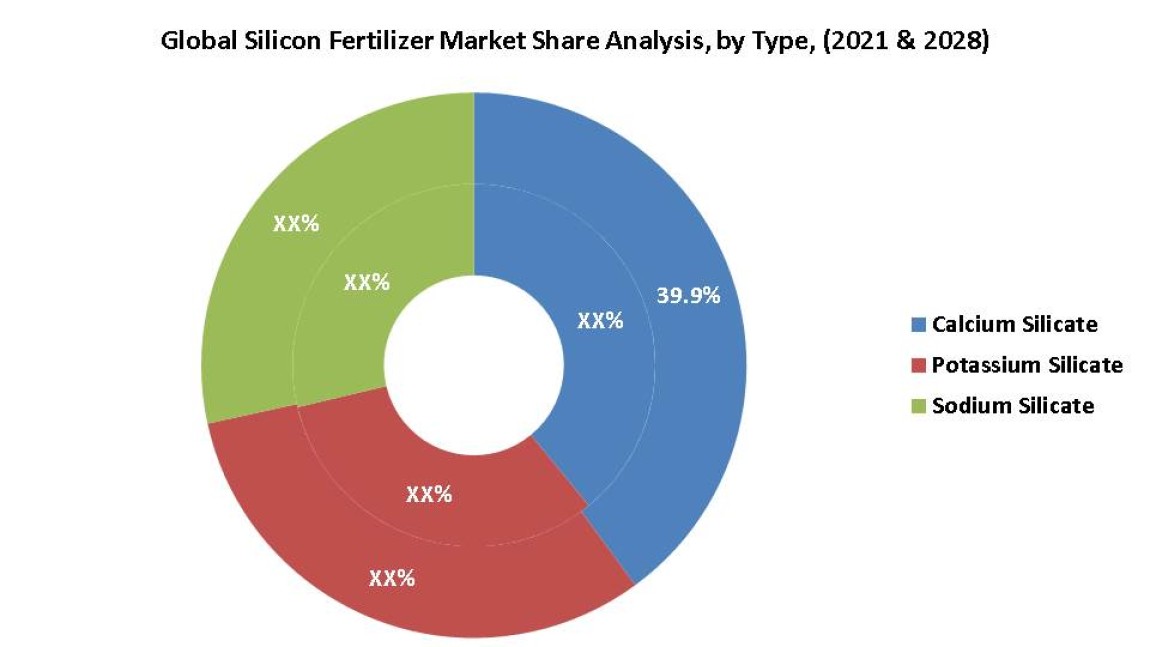
The market has been categorized into three distinct segments based on type: potassium silicate, calcium silicate, and sodium silicate. Among these, the calcium silicate segment asserted its dominance in 2021 and is projected to uphold its leading position throughout the forecast period. Within this timeframe, the calcium silicate segment is anticipated to exhibit the swiftest Compound Annual Growth Rate (CAGR). Renowned as a prominent silicon fertilizer, calcium silicate imparts significant benefits to plants, particularly under conditions of abiotic or biotic stress. The application of silicon can notably enhance soil fertility, bolster disease and insect resistance, optimize photosynthesis, influence plant architecture, regulate evapotranspiration, and enhance tolerance to potentially harmful metals such as iron (Fe) and manganese (Mn).
Asia Pacific Dominates the Global Silicon Fertilizer Market
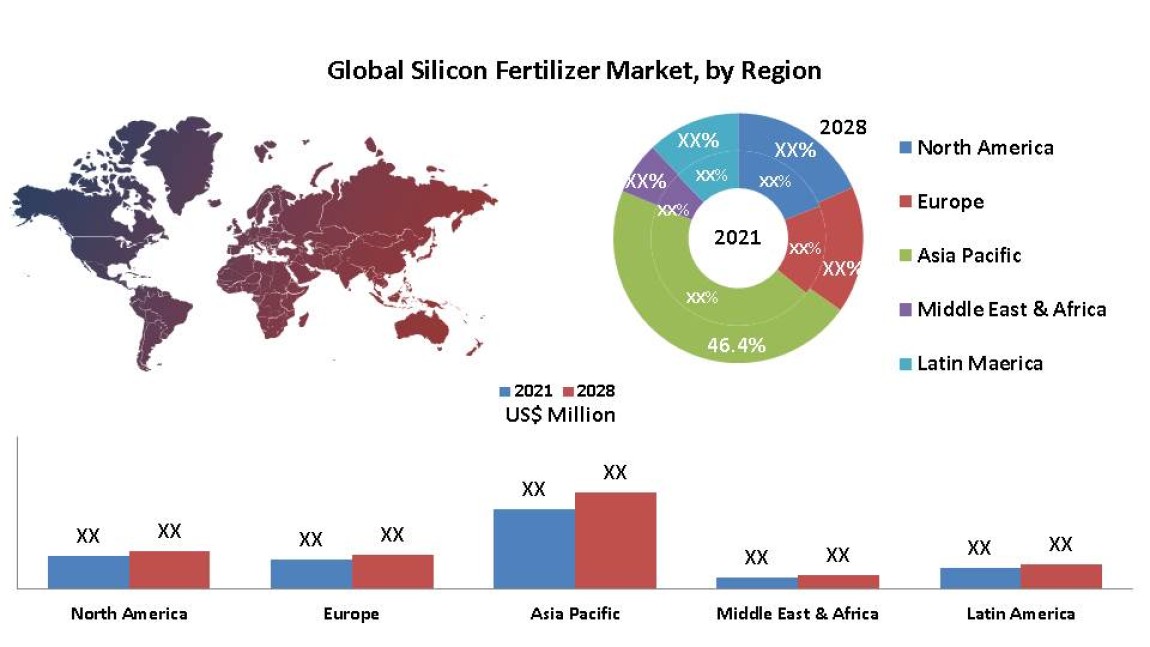
Regional distinctions define the silicon fertilizer market, encompassing North America, Europe, Asia Pacific, Middle East and Africa, and Latin America. In 2021, the mantle of market leadership was donned by Asia Pacific, a dominion expected to extend steadfastly across the forecast period. This dominance finds its roots in the mounting demand for silicon fertilizers, notably for rice and wheat crops, an inclination witnessed robustly within this region. Population expansion ushering in heightened per capita consumption, coupled with an upsurge in the quest for superior-quality sustenance, jointly drive food requisites. Such trends have ignited heightened demand for silicon fertilizers among farmers, unearthing novel avenues within the silicon fertilizers domain. Additionally, the transition from grain-centered diets to protein-rich regimens, particularly in China and India, has accentuated the deployment of silicon fertilizers in fostering high-protein crop growth.
In parallel, the North American realm is poised to ascend as the second most pivotal market, riding on the tide of augmented food demand and the fervent adoption of silicon fertilizers by farmers. A landscape defined by stringent regulatory measures coupled with an escalating appetite for silicon fertilizer solutions has fueled market expansion. A backdrop marked by industrialization, mining, and urban sprawl has eroded arable land in North America. Evident in FAOSTAT data, the United States and Canada together accounted for over 10 million hectares of arable land in 2019, reflecting a substantial 12% of the global planted area. In light of this scenario, farmers are embracing silicon fertilizers as catalysts to bolster crop productivity.
Competitive Landscape
Strengthening market foothold remains a prime objective for industry contenders, prompting the deployment of a diverse array of strategies. This multifaceted approach encompasses forging strategic alliances, cultivating partnerships, orchestrating mergers and acquisitions, embarking on geographic expansion endeavors, and unveiling novel products or services. Within this dynamic arena, notable market participants include Agripower Australia Pty Ltd, Denka Company Limited, MaxSil Pty Ltd, Yara International ASA, Plant Tuff Inc, Redox Ltd, Sigma AgriScience, LLC., Levity Crop Science, Fertoz, and Certis USA L.L.C.


